My Comparison of Top 5 Healthcare Learning Management Systems in 2026
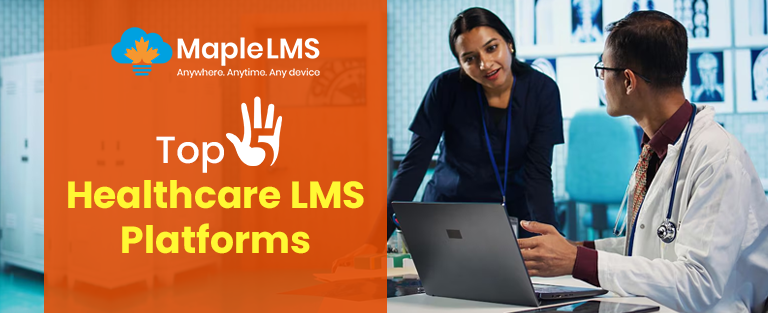
Healthcare organizations looking for the best learning system in 2026 should evaluate more than just course delivery features. In my comparison of healthcare LMS platforms, I focused on key factors such as security, compliance management, clinical training workflows, reporting capabilities, and scalability.
Based on real healthcare use cases and regulatory requirements, I found that associations or other organizations seeking a hipaa compliant lms should prioritize platforms with secure data architecture, comprehensive audit trails, and healthcare-specific learning pathways rather than relying on generic corporate LMS solutions.
I explained below my comparison of 5 best Healthcare LMSs, namely, MapleLMS, Absorb, Tovuti LMS, HealthStream LMS, and Relias.
Table of Contents
What Is a Healthcare Learning Management System (LMS)?
A healthcare Learning Management System (LMS) is a specialized platform that helps healthcare organizations deliver, manage, and monitor training for physicians, nurses, clinical staff, and administrators. Unlike standard corporate LMS platforms, healthcare LMS solutions are built to support industry-specific requirements such as compliance training, continuing education, certification management, and accreditation reporting.
A healthcare LMS should accommodate various learning formats, including online courses, instructor-led training, virtual events, webinars, and on-demand educational content. It should also provide accurate tracking and reporting for credits such as Continuing Medical Education (CME), Continuing Nursing Education (CNE), Continuing Education (CE), and Maintenance of Certification (MOC).
For hospitals and healthcare systems, the purpose of an LMS extends beyond employee training. Maintaining professional licensing, fulfilling regulatory and accreditation standards, ensuring workforce competency, and eventually promoting improved patient care outcomes are all made possible by it.
Essential Elements of a Healthcare LMS
Not all LMS platforms are designed for the unique needs of healthcare organizations. In my opinion, the best healthcare LMS helps manage compliance, support professional development, and simplify training administration while fitting smoothly into healthcare workflows.
1. CME/CE Credit Management
Supports CME and CE credit tracking with integrations to systems like ACCME PARS, JA-PARS, ANCC, and CPE Monitor, making credit reporting faster and easier.
2. MOC Tracking
Helps healthcare professionals manage MOC Part 2 and Part 4 requirements, including self-assessments and performance improvement activities.
3. Scalable User Management
Offers role-based access, Single Sign-On (SSO), and centralized administration to manage learners across multiple hospitals, clinics, and departments.
4. Easy-to-Use Learning Experience
Provides a simple, mobile-friendly interface so clinicians can easily access training, resume courses, and track their progress.
5. Automated Reporting and Compliance
Automates credit management, compliance tracking, and reporting with real-time dashboards and audit-ready reports.
6. Skills and Competency Tracking
Allows organizations to track completed training, required skills, and competency assessments to ensure staff are properly qualified.
7. Integration with Healthcare Systems
Connects with HR, workforce management, and other healthcare systems to automate learner enrollment and training records.
8. Compliance Training Management
Supports mandatory training programs such as HIPAA, OSHA, and workplace safety, with automated reminders for renewals.
9. Support for Interactive Learning Content
Works with SCORM, xAPI, videos, simulations, and other engaging learning formats to improve knowledge retention.
10. Secure and HIPAA-Compliant Platform
Includes strong security features such as encrypted data, access controls, and audit logs to help protect sensitive healthcare information.
HIPAA-compliant LMS for Hospitals: What to Look For
Hospitals manage sensitive employee and patient-related information, making security and compliance essential when choosing an LMS. As I have seen, a HIPAA-compliant LMS helps organizations deliver training while protecting data and meeting regulatory requirements.
Key features to look for include:
- Secure data storage and encryption
- Role-based access controls
- Audit trails and compliance reporting
- Clinical competency and certification tracking
- Mandatory compliance training management
- Integration with HRMS and credentialing systems
The right healthcare HIPAA-compliant LMS should not only support training delivery but also help hospitals simplify compliance, reduce administrative workload, and maintain regulatory readiness across departments and facilities.
Common Use Cases of a Healthcare LMS
Healthcare organizations rely on LMS platforms for much more than employee training. I think the right system mainly supports education, compliance, certification management, and workforce development across the organization.
Some of the most common healthcare LMS applications include:
1. CME and CE Programs
Deliver accredited learning, track earned credits, and simplify reporting requirements.
2. MOC and Certification Management
Monitor certification progress, MOC activities, and renewal deadlines.
3. Regulatory and Compliance Training
Manage mandatory training programs such as HIPAA, workplace safety, and infection prevention.
4. Employee Onboarding
Provide standardized training and orientation for new staff members across departments.
5. Clinical Performance Improvement
Connect learning initiatives with quality improvement goals and competency development.
6. Enterprise-Wide Learning Delivery
Maintain centralized oversight while providing uniform training throughout several clinics, hospitals, and healthcare institutions.
Before selecting a healthcare LMS, identify your primary training and compliance objectives. Choosing a platform that aligns with your organization’s needs will deliver greater value than investing in features that may never be used.
How to Find the Best LMS for CME Tracking?
An effective Continuing Medical Education (CME) management system should simplify credit administration for both learners and administrators. When I compared healthcare LMS platforms, I looked for capabilities that streamline credit tracking, accreditation reporting, and compliance management.
Key features to consider include:
- Automatic awarding of CME credits once learners complete courses or educational activities.
- Flexible credit allocation options, allowing learners to receive credit for partial participation or incremental learning hours.
- Direct connectivity with accreditation reporting systems such as the Accreditation Council for Continuing Medical Education Program and Activity Reporting System (ACCME PARS) and Joint Accreditation Program and Activity Reporting System (JA-PARS).
- Built-in Maintenance of Certification (MOC) management for performance improvement projects, self-assessments, and ongoing certification requirements.
- Detailed reporting dashboards and audit records that support accreditation reviews and demonstrate compliance with regulatory standards.
A healthcare-specific LMS should automate these workflows, reducing administrative burden while ensuring accurate credit reporting and a seamless learner experience.
5 Best Healthcare LMSs Comparison
1. MapleLMS
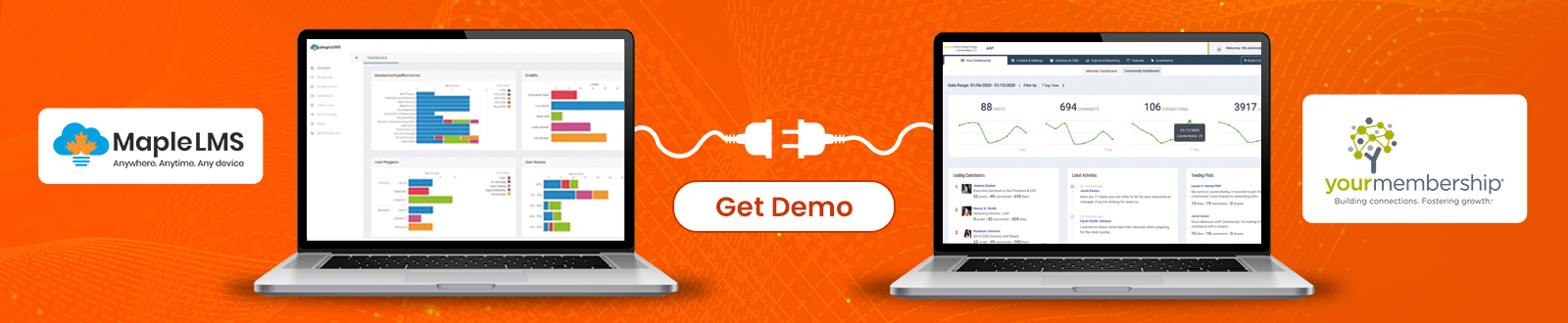
MapleLMS is an AI-powered learning platform designed for regulated industries, including healthcare, life sciences, and medical associations or organizations. Our LMS supports credential tracking, CME/CNE workflows, credits management, and automation of compliance reporting. In this Healthcare LMS comparison, we offer high automation and deep reporting, making us ideal as a modern HIPAA-compliant LMS solution.
We designed our LMS for healthcare associations and support PARS, credit claiming, certification tracking, SSO, and advanced reporting. Our LMS platform also offers integrations for accreditation workflows, MOC tracking capabilities, and automation features that help organizations manage compliance and member education efficiently.
- AI content generation for clinical training
- Built-in compliance tracking
- Salesforce and AMS integrations
- Advanced analytics for credential monitoring
- Credit system integrations
Pros
- Strong healthcare workflow automation
- Highly configurable reporting
- Multi-tenant training delivery
Cons
- Premium pricing tier for advanced AI modules
Best For
Medical associations and healthcare organizations, hospitals, and providers or institutions that deliver medical certifications.
2. Absorb
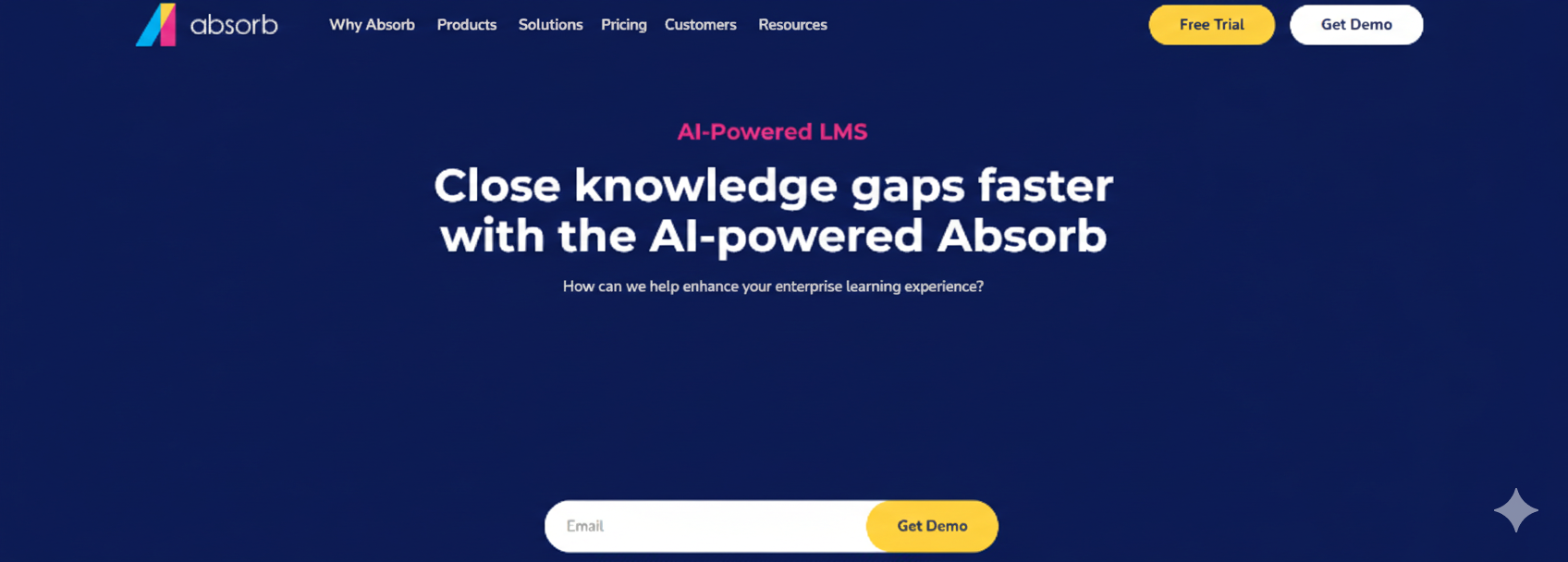
Absorb LMS is widely adopted across corporate and healthcare sectors. Absorb stands out for UI simplicity and enterprise scalability. While it supports compliance workflows, organizations must configure modules carefully to operate as a compliant LMS.
Strong reporting, learner interaction, and SSO features characterize this adaptable LMS. While it supports continuing education programs, organizations requiring advanced healthcare-specific features such as PARS may need additional customization or integrations.
- Highly intuitive learner interface
- Strong reporting tools
- Scalable enterprise architecture
Pros
- Easy deployment
- Strong partner ecosystem
Cons
- Healthcare workflows may require customization
Best For
Healthcare enterprises need easy adoption and corporate-style learning delivery.
3. Tovuti LMS
Tovuti LMS focuses on engagement-driven learning experiences. This LMS is recognized for interactive course delivery and learner engagement features. It can function as a compliant LMS when deployed with appropriate security configurations.
It provides certification management, reporting, and SSO functionality, but healthcare organizations may require supplementary solutions for specialized accreditation reporting, and CME credit management.
- Built-in course authoring tools
- Gamification and engagement modules
- Virtual classroom integration
Pros
- Excellent learner engagement
- Strong content creation tools
Cons
- Less healthcare-native workflow tooling
Best For
Healthcare education providers dedicated to improving learner interaction and enhancing online course delivery.
4. HealthStream LMS
HealthStream is one of the most established healthcare learning vendors. This LMS leads in clinical workforce development and hospital compliance management. It is built from the ground up as a fully-compliant LMS as well.
It offers robust support for compliance training, credentialing, competency management, CME administration, and reporting. Its healthcare-focused capabilities make it well-suited for organizations managing accreditation requirements, certification programs, and large-scale workforce training initiatives.
- Deep clinical training libraries
- Credential and competency management
- Hospital workforce optimization tools
Pros
- Healthcare-native design
- Strong compliance framework
Cons
- Less flexible outside healthcare vertical
Best For
Hospitals and healthcare systems need deep clinical workforce training.
5. Relias
Relias specializes in healthcare compliance and staff training. This LMS performs well for standardized healthcare education and compliance automation. It is widely deployed as a compliant LMS for care providers.
It delivers healthcare-specific compliance management, certification tracking, and workforce development tools. The platform supports continuing education programs, competency assessments, reporting, and SSO integrations, making it a strong option for healthcare providers seeking to streamline training, compliance, and professional development activities.
- Healthcare content libraries
- Compliance-first course structures
- Staff competency tracking
Pros
- Ready-to-use healthcare training content
- Easy compliance tracking
Cons
- Limited customization flexibility
Best For
Clinical training programs, elder living communities, and care providers.
| Feature | MapleLMS | Absorb | Tovuti | HealthStream | Relias |
| AI Learning Automation | ✔ AI-Powered | ✔ AI Features | ✔ AI-Assisted | ◑ Limited AI | ◑ Emerging AI |
| Healthcare Compliance Tools | ✔ Healthcare-Focused | ◑ General Compliance | ◑ Basic Compliance | ✔ Comprehensive Suite | ✔ Strong Compliance |
| CME Credit Support (like, PARS) | ✔ Advanced Support | ◑ Limited Suppor | ◑ Basic Support | ✔ Extensive Support | ✔ Strong Support |
| Integration Ecosystem | ✔ Extensive Integrations | ✔ Broad Integrations | ✔ Standard Integrations | ✔ Healthcare Integrations | ✔ Wide Ecosystem |
| MOC & Practice Enhancement | ✔ Supported | ✖ Not Specialized | ✖ Limited Support | ✔ Comprehensive | ✔ Supported |
Pro Tip: “Explore our Healthcare Industry page to discover more Healthcare LMS features & use cases!”
Pricing Overview
- MapleLMS — Flexible Annual/Monthly user-based pricing
- Absorb — Mid to enterprise tier subscription
- Tovuti — Mid-market pricing
- HealthStream — Enterprise healthcare pricing
- Relias — Subscription with healthcare content licensing
Frequently Asked Questions
Conclusion
Choosing the right healthcare learning system depends on regulatory needs, training scale, and integration ecosystem. This Healthcare LMS comparison shows that healthcare organizations should prioritize automation, compliance workflows, and reporting depth. Selecting a proven HIPAA-compliant LMS ensures both regulatory protection and effective workforce training outcomes. Talk to our industry experts to discover MapleLMS, a top-rated healthcare LMS!
Demo