
Blog
LMS Migration Project Plan: A Complete Guide with Adaptable Template
Plan your LMS migration step by step: week-by-week project plan, data mapping matrix, UAT checklist, and a multi-region rollout template. Updated 2026.

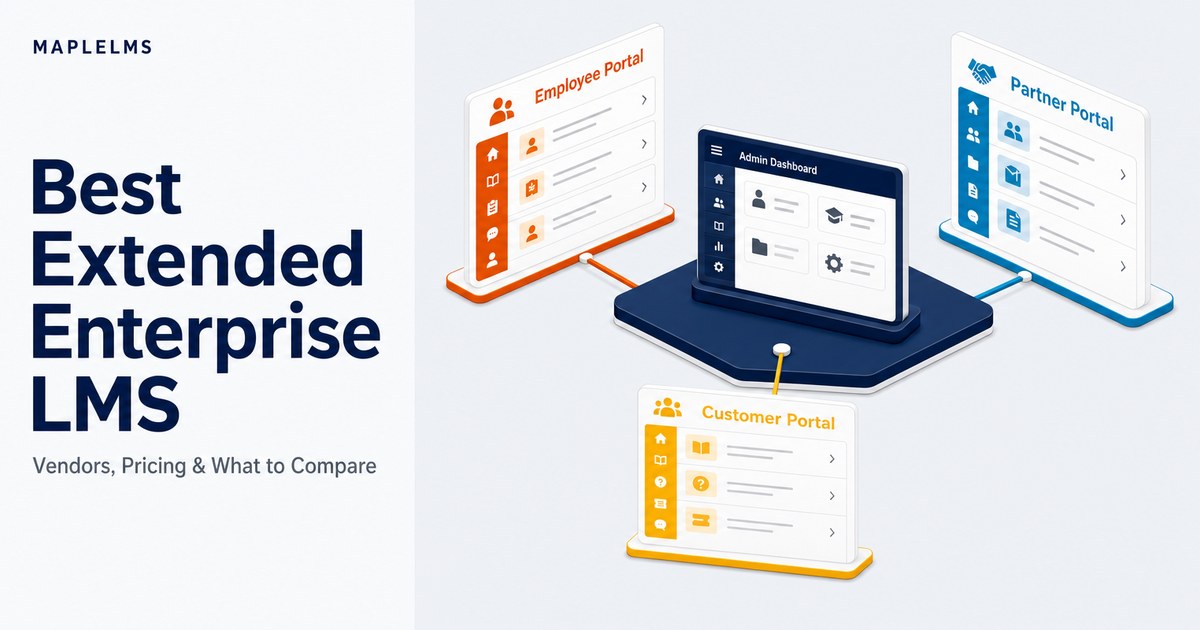
Compare top extended enterprise LMS vendors for 2026. See pricing models, portal costs, admin effort, and which platforms run partner and employee training from one admin.
Plan your LMS migration step by step: week-by-week project plan, data mapping matrix, UAT checklist, and a multi-region rollout template. Updated 2026.
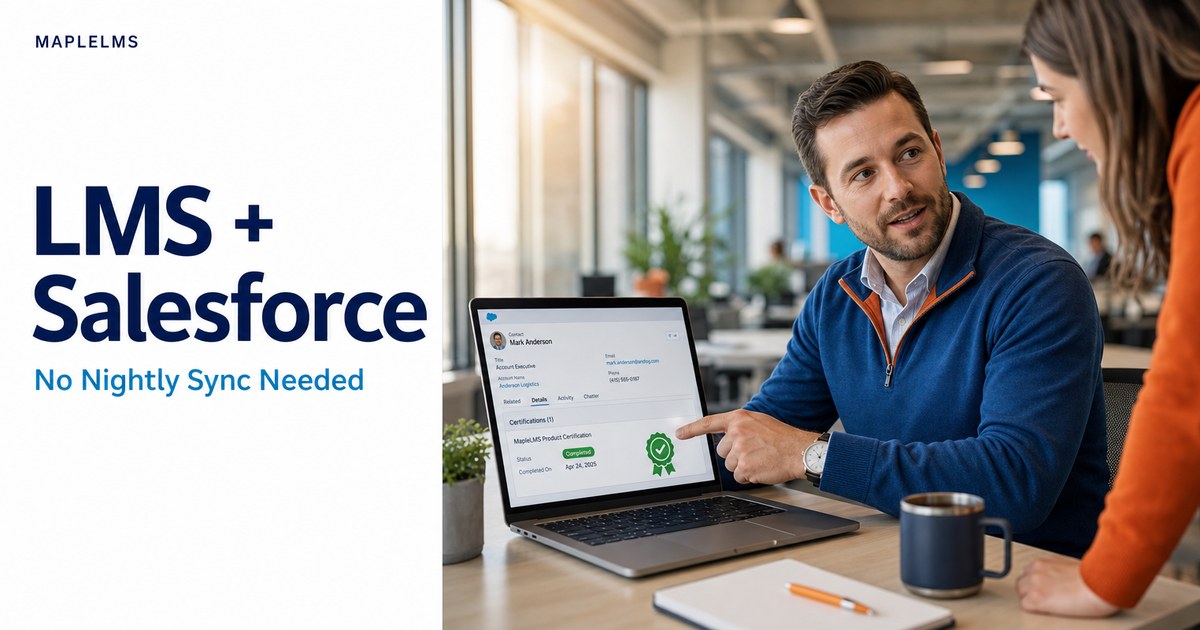
Learn how LMS integration with Salesforce works, which architecture eliminates nightly syncs, and how to evaluate AppExchange LMS apps before you commit.

Learn how retail chains use a Learning Management System to train frontline staff on new products and promotions by location, even with high turnover.
Request a quote and our experts will contact you within 24 hours with tailored solutions and pricing.
You can also send us a quick email at sales@maplelms.com.
MapleLMS
Last updated: Oct 13, 2026
By Surbhi Bhatia, Content Coordinator, MapleLMS
An extended enterprise Learning Management System (LMS) is a platform that trains employees, channel partners, distributors, and customers from one administrative back-end, giving each audience its own branded portal without requiring separate contracts or separate technology stacks. With 75% of global B2B transactions projected to flow through channel partners by 2025 (Continu, 2026) and the global LMS market valued at $30.51 billion in 2026 (Mordor Intelligence, 2026), choosing the right platform is a commercial decision, not just a training one.
Most evaluations stall at the vendor shortlist. Buyers discover real costs only after a demo: per-portal fees, CRM integration charges, and admin overhead that the headline price never mentions. This guide covers the leading extended enterprise LMS vendors, how their pricing models compare at different partner volumes, the hidden costs to budget before you sign, and how to measure the ROI your program should generate.
Key Takeaways
- Extended enterprise LMS platforms let employees, partners, distributors, and customers train from separate branded portals under one admin, often on a single contract.
- Enterprise-scale deployments typically cost $50,000 to $500,000 or more annually. Each additional branded portal adds $250 to $400 per month in many vendor contracts (Paradiso Solutions, 2026).
- When partner headcounts fluctuate seasonally, a monthly active user (MAU) pricing model usually costs less than per-seat licensing.
- Certified channel partners generate 6× more revenue than uncertified partners (Continu, 2026), making the ROI case clear when the LMS connects training completion to pipeline data.
- Salesforce-native LMS platforms eliminate the separate integration cost and data-sync overhead that most enterprise LMS vendors charge as add-ons.
An extended enterprise Learning Management System (LMS) is a platform that delivers branded, separate training experiences to audiences outside a company's own employees, such as channel partners, distributors, customers, and franchisees, all administered from a single back-end. With 75% of global B2B transactions projected through channel partners by 2025 (Continu, 2026), training external audiences at scale is now a direct revenue concern, not just an HR function.
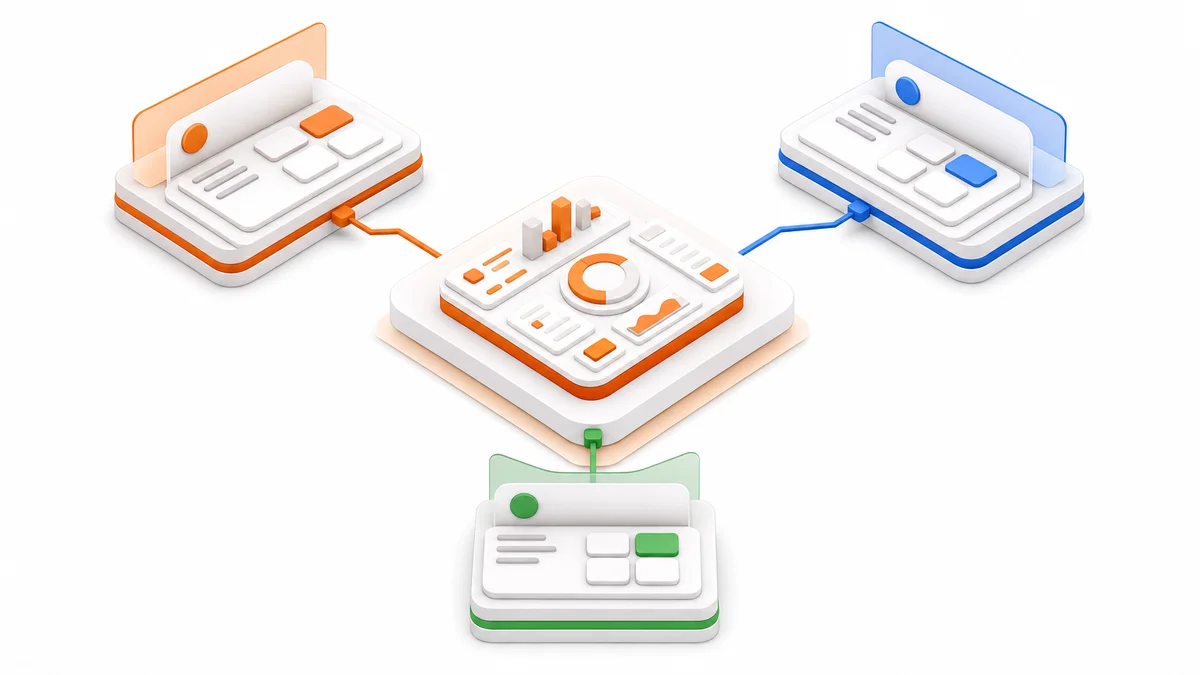
The corporate LMS market reached $17.47 billion in 2026. It is forecast to grow at 19.65% annually to $72.30 billion by 2034, with extended enterprise and AI-powered personalization as the two primary growth drivers (Precedence Research, 2026). The broader LMS market sits at $30.51 billion in 2026, growing at 12.45% annually to a projected $54.86 billion by 2031 (Mordor Intelligence, 2026).
The business case is sharpening. 67% of B2B partner ecosystem leaders expect indirect revenue to grow more than 30% above the previous year's levels in 2025 (Continu, 2026). Partner enablement software, the category that includes extended enterprise LMS, stood at $2.5 billion in 2024 and is forecast to reach $6 billion by 2033 (Continu, 2026). A platform that cannot prove partner training drives that growth will lose budget priority fast.
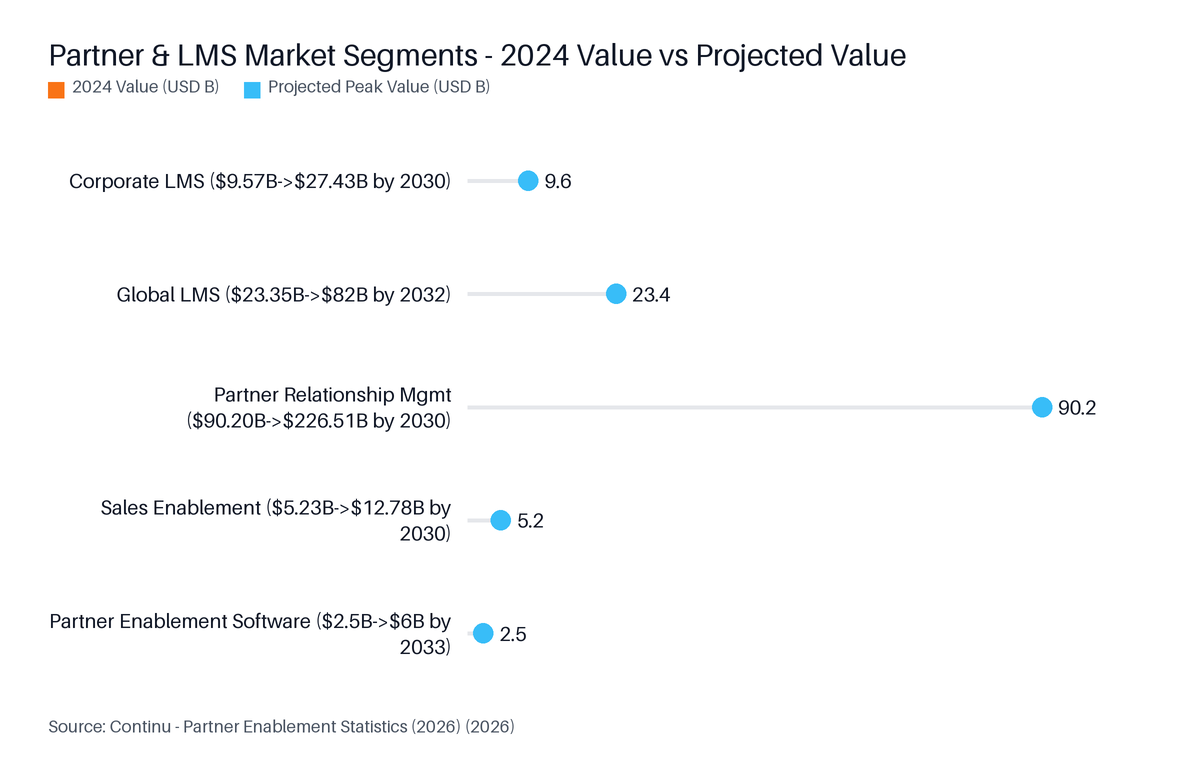
Source: Continu — Partner Enablement Statistics (2026), 2026
A standard corporate LMS is built for internal employees. An extended enterprise LMS adds three capabilities that matter for external audiences:
Several extended enterprise LMS vendors support employees, partners, and customers from one admin console on a single contract: Docebo, LearnUpon, Thought Industries, Absorb LMS, and MapleLMS all offer multi-portal or multitenant architectures under one agreement. The deciding factor is rarely portal count. It is how much admin effort each portal demands, whether enrollment is automated by role or CRM data, and whether all audience types are covered from day one.

| Vendor | Multi-Portal / Multitenant | White-Label Branding | Automated Enrollment | Salesforce-Native | Published Entry Price |
|---|---|---|---|---|---|
| MapleLMS | Yes (multitenant microsites) | Yes | Yes (by role, region, or CRM data) | Yes (100% native) | Custom (demo required) |
| Docebo | Yes (Share module) | Yes | Yes (rules-based) | Via connector | Custom |
| LearnUpon | Yes (dedicated portals) | Yes | Limited (manual triggers) | Via connector | ~$800 - $1,000/mo (≤100 users) (Continu, 2026) |
| Thought Industries | Yes (purpose-built for external) | Yes | Yes | Via connector | Custom |
| Absorb LMS | Yes (Absorb Infuse) | Yes | Yes | Via connector | Custom |
Sources: Continu (2026); Paradiso Solutions (2026).
MapleLMS is a Salesforce-Native Learning Management System. It runs entirely within Salesforce infrastructure, using standard Salesforce objects and permissions. Employees, partners, distributors, and customers all train from separate branded portals administered from one console. There are no external databases, no data silos, and no sync connectors to maintain.
Enrollment triggers automatically based on Salesforce role, region, or custom object data. When a new partner rep is provisioned in Salesforce, the correct learning path starts without any manual admin action. Sharable Content Object Reference Model (SCORM) completion data and certifications sync bidirectionally in real time. Partner readiness becomes visible alongside pipeline data in a single Salesforce dashboard.
MapleLMS customer data shows one life sciences organization with 150,000-plus learners across North America, Europe, and Asia-Pacific reduced LMS administration effort by 35%. Compliance tracking time dropped from 5 days to under 1 day after migrating from Cornerstone OnDemand. Training completion rates rose from 68% to 91% in the same program.
Our data: MapleLMS customer data from an anonymised life sciences migration shows learner engagement increased by 42% and reporting turnaround moved from 2-3 days to real-time after migrating 150,000+ learners from Cornerstone to MapleLMS's multitenant platform.
The platform carries SOC 2 Type II, ISO 27001, and WCAG 2.1 AAA certifications. It includes 24x7x365 global support, unlimited admin training, unlimited storage, and all software upgrades at no additional cost.
Docebo builds its extended enterprise capability around its Share module. This creates separate portals with delegated admin rights per audience. In 2026, Docebo released AgentHub: a set of artificial intelligence agents that convert knowledge from SharePoint, Google Drive, and other sources into structured learning content. Docebo also launched an MCP Server, which reached general availability in July 2026. This connects Docebo as a native knowledge source inside Claude, Copilot, and ChatGPT. Salesforce integration is available, but it requires a connector rather than a native deployment. Buyers with complex Salesforce governance requirements should factor in the additional integration cost and maintenance overhead that a connector introduces.
LearnUpon offers dedicated portals per audience with separate user management. It launched its Agentic Learning Platform in July 2026. The new platform adds AI-driven automation for learning administration, journey creation, and reporting. This directly reduces manual overhead for multi-portal partner programs (Trainery, 2026). Published entry pricing is approximately $800 to $1,000 per month for up to 100 users. Larger programs require a custom quote (Continu, 2026). One verified customer wrote in February 2026: "Multiple portals let us track different user groups with ease. We're now exploring HubSpot integration to automate processes." (eLearning Industry, 2026). Salesforce integration for enrollment automation requires a connector, not a native deployment.
Thought Industries is purpose-built for customer education and partner training. It suits technology and professional services companies running large external learner networks. The platform supports multi-portal branding and commerce-enabled learning, such as paid certifications and course sales to external audiences. Thought Industries handles delegated admin well. This means partner organizations can manage their own learner assignments without touching the master console. Salesforce data sync requires a connector, which adds integration cost and configuration time. It is a strong choice for buyers whose primary audience is customers and partners, rather than internal employees who also need compliance tracking.
Absorb LMS supports extended enterprise through its Absorb Infuse product. Absorb Infuse embeds learning directly inside third-party applications and partner portals, rather than directing learners to a standalone LMS domain. This suits buyers who want training to appear inside an existing partner portal or customer-facing tool without a separate login step. Absorb supports white-label branding and rules-based enrollment across its portal architecture. Salesforce integration is available via connector. Absorb is well-reviewed for mid-market and enterprise distributor programs where embedding learning in existing workflows matters more than Salesforce-native data alignment.
Ready to see how a Salesforce-native multitenant LMS works in practice? Book a demo with MapleLMS.
Extended enterprise Learning Management System pricing for external learners follows three main structures: per-seat (a fixed annual fee per registered user, regardless of activity), monthly active user or MAU (charged only for learners who log in each month), and per-portal (a flat fee for each branded sub-portal). Enterprise deployments covering partners, customers, or franchisees typically cost $50,000 to $500,000 or more annually (Paradiso Solutions, 2026). Hidden portal and integration costs often double initial budget estimates.

Per-seat pricing suits programs with stable, consistently active partner headcounts. Every registered user costs the same, whether they log in daily or once a year.
Monthly active user (MAU) pricing is a billing model that charges only for learners who engage with the platform in a given calendar month. It is cheaper when a significant share of registered partners are inactive in any given month. This is common in seasonal distribution networks.
Per-portal pricing adds cost based on the number of distinct branded portals, not individual users. It works for programs with few large portals but gets expensive when you need dozens of regional or partner-tier environments. Industry data shows extended enterprise multi-portal pricing runs at a multiplier of 1.5× to 3× the base cost per additional portal (Growth Engineering, 2026).
Published three-year return on investment data from deployed partner training platforms shows Absorb LMS at 490%, Partnerize at 330%, Impartner at 296%, and AWS Marketplace at 234% (Continu, 2026). These figures reflect the revenue impact of structured certification programs, not platform cost alone.
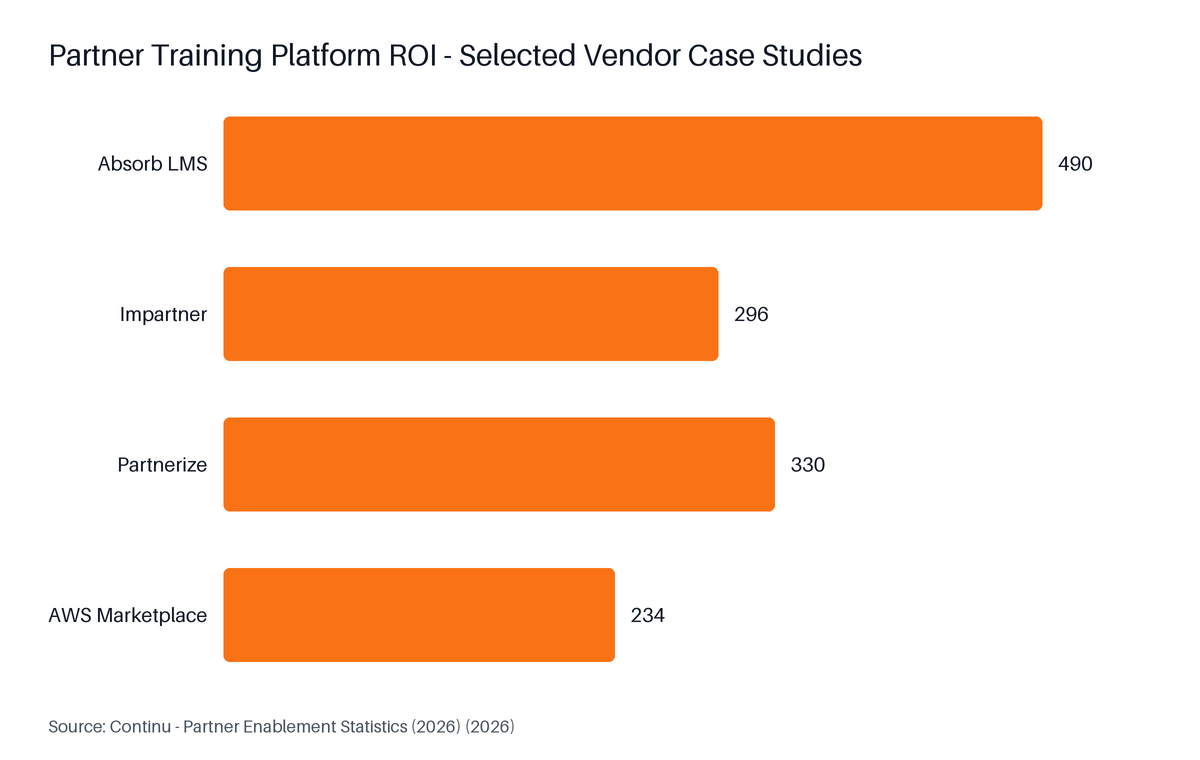
Source: Continu — Partner Enablement Statistics (2026), 2026
| Scenario | Best Model | Reason |
|---|---|---|
| Stable partner headcount, high activity | Per-seat | Predictable cost, simple budgeting |
| Seasonal or fluctuating partner network | MAU | Pay only for active months |
| Few large regional portals, many users each | Per-portal (flat) | Portal cost spread across many users |
| Many small partner portals | Per-seat or MAU | Per-portal fees multiply fast |
| Salesforce-native deployment | Included in Salesforce licensing model | No separate integration cost |
The base price of an extended enterprise LMS rarely covers a full multi-portal partner program. Additional branded sub-portals add $250 to $400 per month each (Paradiso Solutions, 2026). Each CRM, HRIS, or Single Sign-On (SSO) integration adds $3,000 to $4,000 per connection (Paradiso Solutions, 2026). Support, storage, and upgrade fees are often sold separately, and these line items routinely add 50% or more to the initial quote.

These are the cost items most frequently missing from initial LMS budgets for extended enterprise programs:
A Salesforce-native deployment eliminates the CRM integration line entirely. Learning data lives on the same Salesforce objects as pipeline and contact data. No connector to configure or maintain.
Channel partner training return on investment is measurable when the Learning Management System connects certification status to revenue data in the same reporting environment. The clearest benchmark: "Partners who complete certification programs earn 6× more revenue than those who skip training" (Continu, 2026). To build that business case, the LMS must surface completion and certification rates alongside pipeline figures, which requires a native CRM integration or real-time data connection.

For a Salesforce-native LMS, these metrics sit in a single dashboard. Learning records share the same data model as opportunity and contact records. For non-native platforms, generating the same view requires a manual export or a custom integration.
MapleLMS customer data from one anonymised life sciences organization shows reporting turnaround moved from 2-3 days to real-time. Learner engagement increased by 42% after replacing a legacy platform with MapleLMS's multitenant architecture across three regions.
Extended enterprise LMS buyers evaluating commercial, field-force, or partner training programs will find this guide useful. Buyers whose primary need is training embedded inside a single-vendor electronic quality management system (eQMS), where standard operating procedure releases automatically trigger retraining within the same document-control workflow, should evaluate dedicated eQMS vendors instead. The same applies to buyers seeking a pre-built validated Good Practice (GxP) course library or an on-premise LMS deployment.
The corporate LMS market is projected to grow at 19.65% annually through 2034 (Precedence Research, 2026). A significant share of that growth is in extended enterprise use cases. But growth in the category does not mean every platform suits every buyer. If your training requirement is inseparable from document control or corrective and preventive action (CAPA) workflows inside a quality management system, a purpose-built eQMS is a better fit. An extended enterprise LMS integrates with external quality systems. It does not replace them.
Extended enterprise Learning Management System vendors use three models: per-seat (fixed annual fee per registered user), monthly active user or MAU (charged only for learners who log in), and per-portal (flat fee per branded sub-portal). When partner numbers fluctuate, MAU pricing costs least because you pay only for actual usage. Additional branded portals typically add $250 to $400 per month each (Paradiso Solutions, 2026). Per-seat is cheapest when headcount is stable and nearly all registered users are consistently active.
Cornerstone OnDemand's extended enterprise capability requires additional licensing and configuration beyond the base platform. Lower-overhead alternatives include Docebo (Share module with delegated admin), LearnUpon (dedicated portals per audience), Thought Industries (purpose-built for customer and partner education), and MapleLMS (multitenant microsites under one Salesforce-native admin). MapleLMS customer data shows administration effort dropped 35% for a 150,000-plus learner organization after migrating from Cornerstone. For broader context on migration options, see MapleLMS's extended enterprise overview.
Enterprise-scale channel partner training platforms typically cost $50,000 to $500,000 or more annually (Paradiso Solutions, 2026). Most vendors charge per registered user or per seat. Some use a monthly active user model. Others add a per-portal fee for each branded sub-portal. Additional branded portals commonly add $250 to $400 per month each. CRM or Single Sign-On integrations can add $3,000 to $4,000 per connection to total cost of ownership.
LearnUpon and Docebo appear consistently in 2026 shortlists for large distributor networks. A verified LearnUpon customer wrote in February 2026: "Multiple portals let us track different user groups with ease. We're now exploring HubSpot integration to automate processes." (eLearning Industry, 2026). MapleLMS holds 4.8 out of 5 on G2 and 4.96 out of 5 on Salesforce AgentExchange from 92 reviews, with documented user adoption of 86% to 96% across mixed internal and external learner groups.
Yes. Several extended enterprise Learning Management System vendors, including MapleLMS, Docebo, LearnUpon, Thought Industries, and Absorb LMS, support all three audience types from a single contract and one administrative back-end. The key distinction is whether each portal is truly isolated, with its own branding, catalog, and user management, or simply a filtered view of a shared environment. Confirm this architecture explicitly before signing any agreement.
Monthly active user (MAU) pricing is a billing model that charges only for learners who log in and engage with the platform in a given calendar month, rather than every registered seat. MAU pricing costs less than per-seat licensing when a significant share of registered partners are inactive in any given month. This is common in seasonal distribution networks. If most registered users are active every month, per-seat pricing is simpler and often cheaper.
The best extended enterprise Learning Management System for a multi-region, multi-audience program is the one that reduces admin effort per portal, automates enrollment from CRM or HR data, and connects training completion to revenue outcomes without a manual export. The five vendors that consistently meet those criteria in 2026 are MapleLMS, Docebo, LearnUpon, Thought Industries, and Absorb LMS.
Budget beyond the headline price. Additional portals, CRM integrations, and support tiers routinely add 50% or more to the initial quote. When partner headcounts vary by season, a monthly active user model almost always outperforms per-seat pricing. The ROI case is clear: certified partners generate 6× more revenue than uncertified ones (Continu, 2026), so the platform that makes certification visible and measurable pays for itself.
If you run multi-region training across employees, partners, and customers inside Salesforce, or are planning a migration from a legacy platform, book a demo with MapleLMS to see the multitenant portal architecture and Salesforce-native reporting in action.
| TalentLMS | Limited (branches, not full portals) | Partial | Limited | Via connector | From $119/mo (Core) |